

THE FOUNDATIONS
What AI actually is — and isn't — in HR
Most of the confusion around AI in HR starts with the terminology. This section breaks it down — so you understand what you're working with before you evaluate anything or change how your team operates.
- What AI, automation, machine learning, and analytics actually mean — and how they differ
- Where Canadian HR teams are already using AI without realizing it
- What AI handles well today and where it still falls short
- How the current wave of AI differs from the HR tech you've used for years

Most HR teams are already using some form of AI — they just don't call it that. Resume screening tools that surface top candidates, payroll systems that flag anomalies before they become errors, chatbots that handle routine employee questions. These have been part of the HR tech stack for years.
What's changed isn't the technology itself — it's the pace. Generative AI, large language models, and predictive analytics have moved from experimental to operational faster than any previous wave of HR technology. For Canadian organizations, this creates both opportunity and a set of questions that deserve honest answers: what's real, what's overpromised, and what actually matters for a team of your size.
COMING SOON
The Rise of AI in HR: What It Means for Canadian Organizations
AI adoption in Canadian HR is accelerating — but most of the conversation is driven by enterprise use cases that don't apply to mid-market teams. This piece covers what's actually driving adoption, where Canadian organizations are starting, and how to think about AI readiness without the hype.
COMING SOON
AI, Automation, and Analytics: A Plain-Language Primer for HR
Machine learning, generative AI, predictive analytics, robotic process automation — the terms get used interchangeably and most explanations assume a technical audience. This is the non-technical breakdown for HR professionals who need to know what each one does and where it fits.
ROLES & SKILLS
How AI is changing what HR teams actually do
AI takes over the work that keeps HR teams busy but stretched thin. Here's what shifts, what stays, and which skills matter more when the administrative load shrinks.
- Which HR tasks AI is coming for first
- How recruiting, screening, and onboarding are being reshaped by automation
- The shift from admin-heavy HR to strategic, people-focused work
- Skills that matter more in an AI-enabled HR team: data literacy, judgment, and ethics
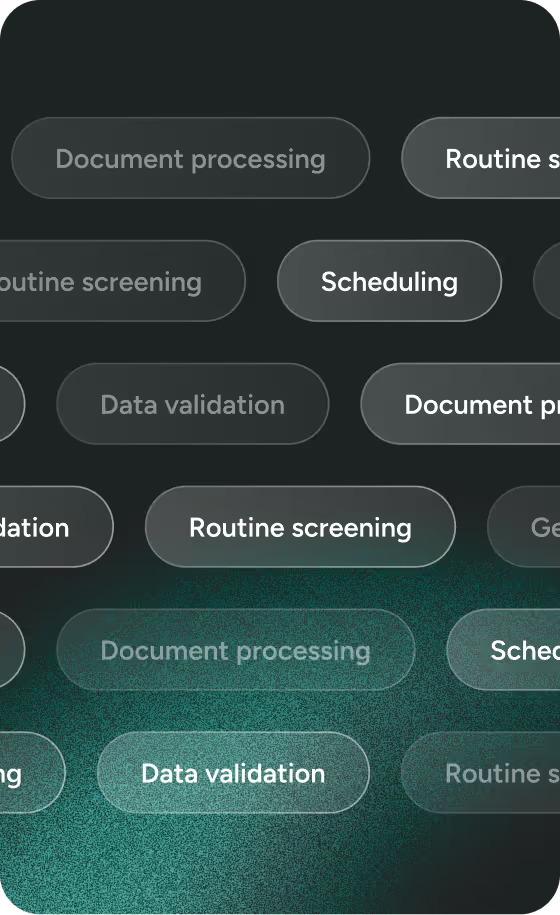
AI is already handling scheduling, data validation, document processing, and routine candidate screening — the tasks that consume the most HR time but require the least human judgment. As that administrative work gets absorbed, the role of HR shifts. Not smaller. Different.
The teams adapting fastest aren't replacing people with tools. They're freeing up capacity for the work that was always supposed to be HR's focus — workforce planning, employee relations, coaching managers, building culture. That requires a different skill set: comfort with data, the ability to question what AI outputs, and the judgment to know when a human decision matters more than an efficient one.
New roles are emerging at the intersection of HR and technology — people analytics leads, HR technologists, and practitioners focused on ethical AI oversight. The function is evolving, and the teams that invest in these skills now will lead the ones that wait.

COMING SOON
Smarter Hiring: How AI Is Redefining Recruitment and Daily Efficiency
From sourcing and screening to onboarding and day-to-day operations, AI is reshaping how HR teams find and support talent. This piece covers the practical use cases — what's working, what to watch out for with bias, and how Canadian teams are balancing automation with the human touch.
COMING SOON
Data-Driven Decisions: Using AI for People Analytics
HR has always had data. AI makes it usable. From turnover prediction to engagement trends and skills mapping, this piece covers how Canadian HR teams are moving from descriptive reporting to predictive analytics — and the ethical guardrails that need to come with it.
THE ROLLOUT
Less theory, more action. Here's how to get it right.
Where to start, how to evaluate tools, and what to get in writing — including the compliance, privacy, and ethical considerations that Canadian HR teams specifically need to address before signing anything.
- How to evaluate AI-powered HR tools before you commit
- Where to start: low-risk, high-visibility tasks that build confidence and show results
- Canadian compliance essentials — PIPEDA, provincial privacy laws, and data residency
- Ethical AI in HR: avoiding bias, maintaining transparency, and keeping humans in the loop
Most implementation struggles come from the same place: starting too big, skipping the evaluation, or not bringing the team along. The organizations getting this right start with high-volume, routine work — document parsing, FAQ chatbots, scheduling, payroll data checks — tasks that produce visible results without requiring heavy change management or creating compliance exposure.
For Canadian HR teams, there's an additional layer. Data residency matters. Vendor privacy commitments need to be specific, not generic. Provincial differences — Quebec's Law 25, Alberta's PIPA, federal PIPEDA — create real obligations that most AI vendors don't address unprompted. And ethical considerations aren't optional: algorithmic bias in hiring tools, transparency about how decisions are made, and maintaining human oversight are all areas where Canadian organizations need clear policies before they deploy.
This section gives you the practical starting point and the right questions to ask.

COMING SOON
Compliance, Privacy, and Ethics: What Canadian HR Teams Need to Know About AI
AI in HR creates real compliance obligations — from PIPEDA and provincial privacy laws to data residency and algorithmic bias. This piece covers the legal landscape, security best practices for integrating AI with your HRIS, and how to build ethical AI policies that protect your employees and your organization.
COMING SOON
Building an AI-Ready HR Function: Where to Start
Getting AI-ready isn't about buying the right tool — it's about assessing your data maturity, building the right skills on your team, and knowing where to start small and scale responsibly. A practical framework for Canadian HR leaders who want to move forward without overcommitting.
